2026-11-27


What is “fault friction” and how should we model it in earthquake mechanics?
Prof. Christopher J. Spiers
The High Pressure-Temperature (HPT) Laboratory in the Geosciences Faculty at Utrecht University
2026.11.27(星期五)15:00,理科二号楼 2821
摘要:
Models describing the evolution of fault friction, during earthquake rupture nucleation and dynamic propagation, provide crucial input for computationally simulating both natural and induced earthquakes. But what is fault friction actually? Are classical laboratory RSF models that describe the dependence of friction on interfacial sliding rate and interfacial state, applicable to the crushed and sheared rock materials that are found in natural faults? And do these classical models apply under the hot, wet, reactive and high pressure conditions that exist at seismogenic depths in the Earth's crust? In this presentation, I shall trace the development of an alternative approach to understanding and modelling fault friction that is based on accounting for the micromechanical and chemical processes that are known to operate in rock materials under crustal conditions (following work by Niemeijer & Spiers 2007, Chen & Spiers 2016 and Chen, Niemeijer & Spiers, 2021, for example). The approach provides a unified route to understanding not only fault friction but also the transition from slow fault creep to unstable frictional failure, dynamic slip and to subsequent fault healing, i.e. to understanding the full seismic cycle. I will describe the basic theoretical structure of the model and show how it predicts all of the effects of sliding velocity, temperature, normal stress, and pore fluid pressure on fault mechanical behaviour that are observed in experiments on fault rock materials conducted at surface to mid crustal conditions. In conclusion, I shall discuss the pros and cons of the model and, if time allows, touch on first attempts to apply the model to seismic rupture modelling.
报告人简介:
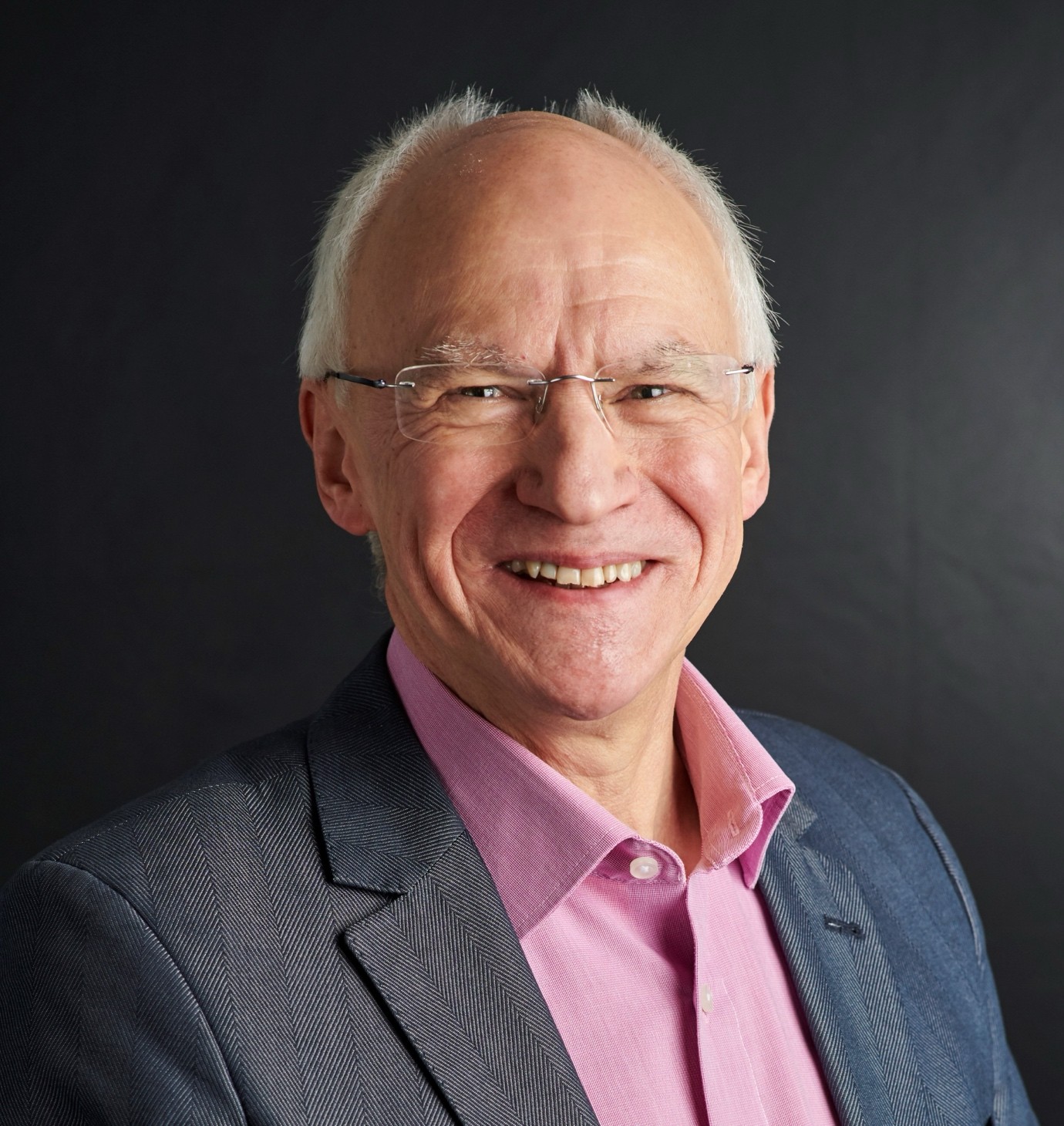
Christopher (Chris) Spiers is Emeritus Professor at the High Pressure-Temperature (HPT) Laboratory in the Geosciences Faculty at Utrecht University, Netherlands. He founded and led the lab until retirement in 2020, specializing in experimental rock and fault mechanics, and the effects of fluid-rock interactions. Following his PhD at Imperial College, London, and a Miller Fellowship at UC Berkeley, he moved to Utrecht in 1981, becoming full professor in 1992. Chris has worked on topics ranging from the creep, damage and healing behaviour of rocksalt, carbonates and silicate rocks, to seismic fault friction and the mechanical and transport properties of reservoir rocks, caprocks, coal and shales. He has served as Dean and Education Director in Earth Sciences at Utrecht and played a leading role in university and national research programmes on geo-resources, geo-storage and induced seismicity. Chris has published more than 230 peer-reviewed contributions, and in 2017 received the EGU Néel Medal in Rock Physics. He is currently guest professor at the State Key Laboratory for Earthquake Dynamics and Forecasting in Beijing (Geological Institute, China Earthquake Administration), collaborating with scientists there since 2008. In 2024, he was awarded the Chinese Government Friendship Award.